MILOS
RENT A BOAT
RENT A BOAT
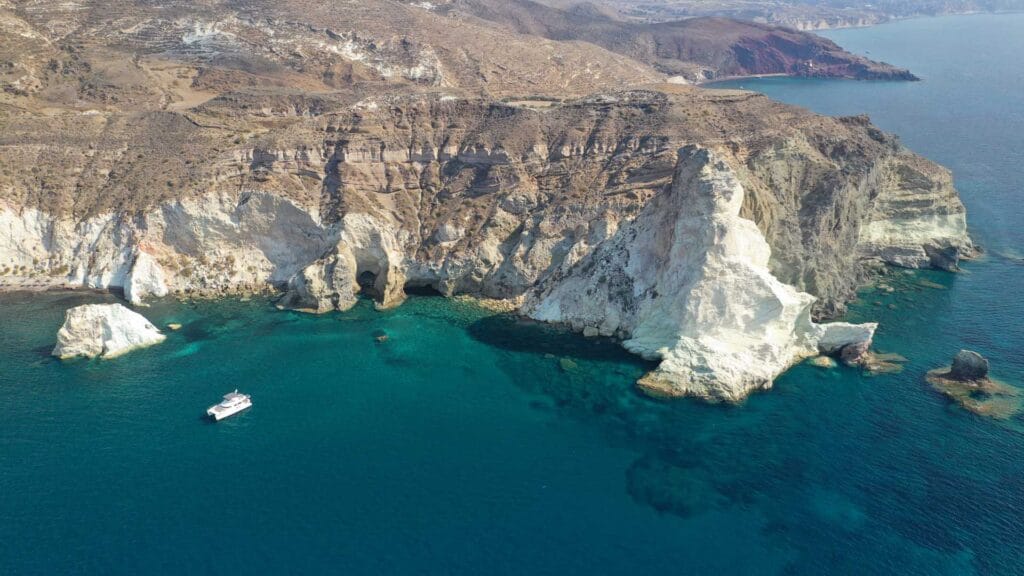
Milos has over 70 beaches — more than any other island in the Cyclades. Thanks to its volcanic geology, no two look alike. You will find sculpted white cliffs that look like another planet, coves framed by ochre and rust-coloured rock, natural lagoons with water so clear it barely looks real, and sea caves large enough to swim through.
Here is the part most travel guides understate: many of the best beaches in Milos are not reachable by road. The island's western coast is closed to vehicles, rough tracks end well before the most dramatic scenery begins, and the only reliable way to access a significant number of Milos's finest swimming spots is from the water.
That is not a limitation — it is the whole point. Approaching a beach by boat means fewer crowds, more flexibility, and the ability to build a route that matches the wind, the light, and your mood. Below is a guide to eight beaches and coastal landmarks that make a Milos boat rental one of the smartest decisions of your trip.
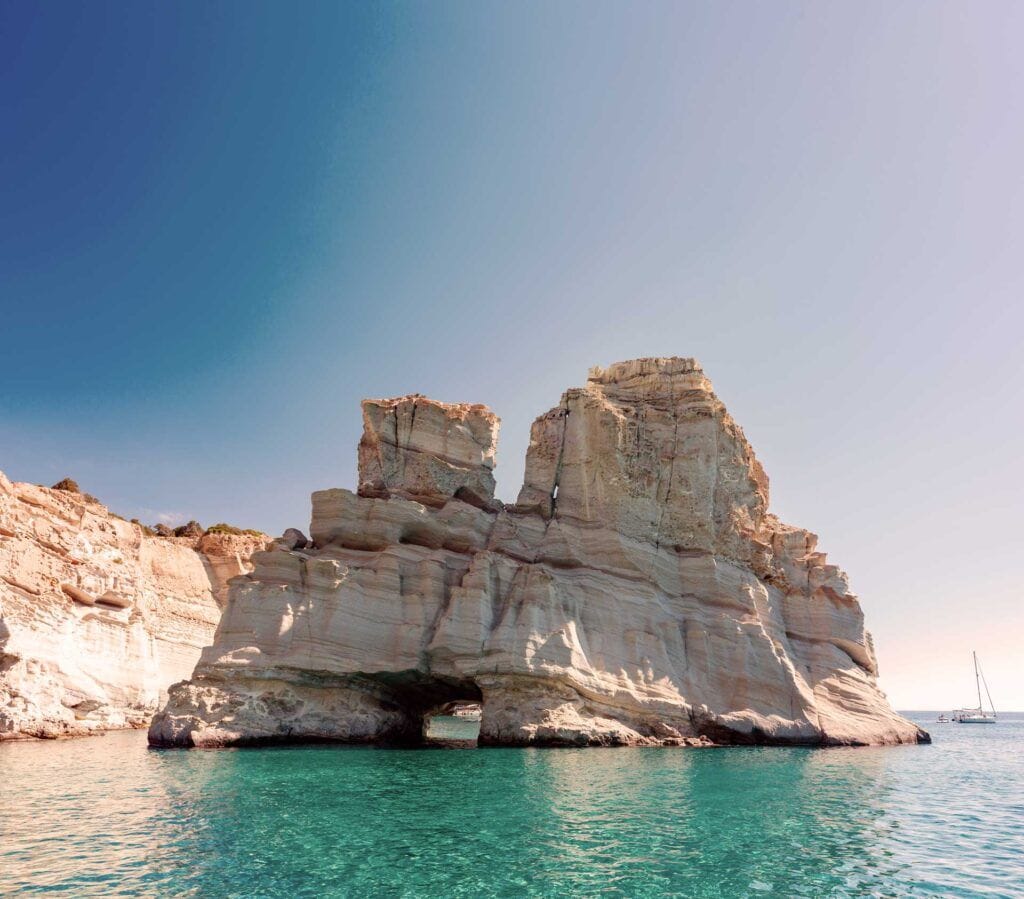
If Milos has a single must-see landmark, Kleftiko is it. A cluster of towering white rock formations rising from deep blue water on the island's southwest coast, it was once used as a hideout by pirates — hence the name, which loosely translates to "stolen" or "thieves' lair." Today, it is the most iconic swimming and snorkelling destination in the Cyclades.
What makes Kleftiko exceptional is the combination of scale and accessibility. The rock arches are massive. The caves are deep enough to swim through, with shafts of light cutting through the water. Visibility regularly exceeds 20 metres. And because there is no road access whatsoever, the only way to get here is by boat — which means the crowds that plague other Greek island hotspots simply do not materialise.
Most Kleftiko boat tours depart from Agia Kyriaki beach on the south coast and take approximately 30–40 minutes each way. If you are driving your own rented boat, the approach from the south is straightforward and the reward is having the caves to yourself before the tour groups arrive. This is widely considered one of the best beaches in Milos for snorkelling.
Access: Boat only. No road access.
Best for: Snorkelling, cave swimming, photography.
Tip: Arrive before 11:00 to explore the caves in relative solitude. Water is deep — bring a mask and fins.
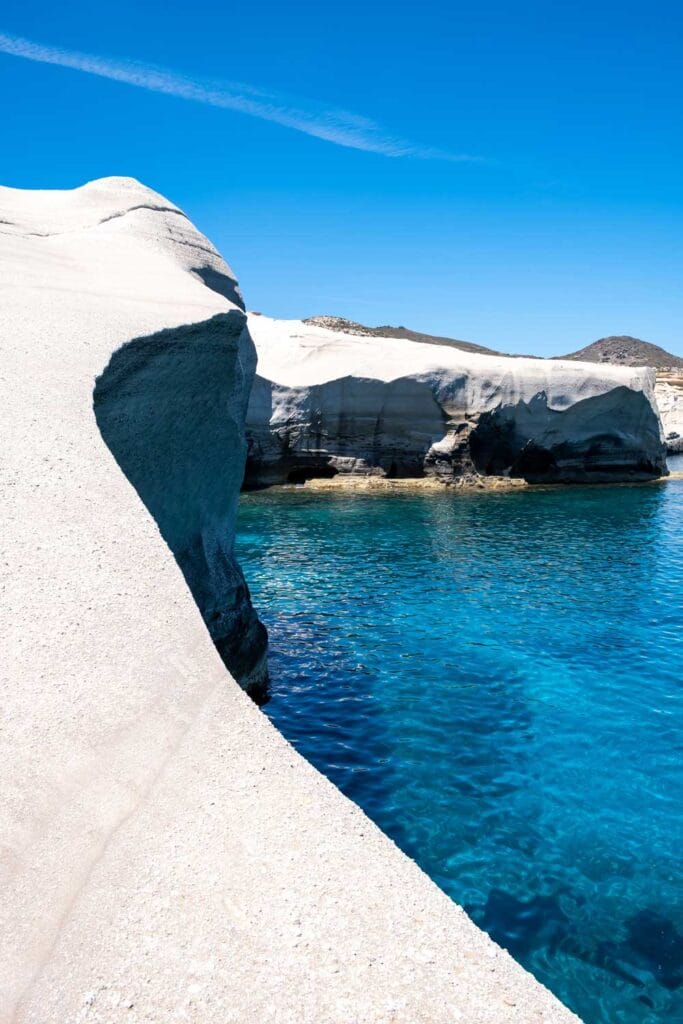
Sarakiniko is the most photographed spot on Milos and one of the most recognisable landscapes in all of Greece. Smooth white volcanic rock, shaped over millennia by wind and water, forms an alien terrain that drops into electric-blue sea. On a bright morning, the contrast is almost surreal.
Unlike Kleftiko, Sarakiniko is reachable by road — and in peak season, it shows. The small sandy cove fills early, and the surrounding rocks become busy with sunbathers and photographers by midday. Arriving by boat changes the experience entirely. You can anchor just offshore, swim in without competing for space, and enjoy the landscape from the water — which is arguably its best angle.
The rock formations also offer natural diving platforms at various heights, making it popular with cliff jumpers. Underwater, the white rock continues below the surface, creating an unusual and photogenic snorkelling environment.
Access: Road (parking limited, fills early) or boat.
Best for: Photography, cliff jumping, swimming, snorkelling.
Tip: If visiting by boat, approach from the east. There is no sand underwater — wear water shoes for the rocky entry.
Tsigrado is tiny, sheltered, and strikingly beautiful — a narrow cove with turquoise water hemmed in by steep cliffs on three sides. By land, reaching it requires climbing down a rope-assisted rock face or a fixed metal ladder, which is exactly why it stays quieter than nearby beaches.
By boat, Tsigrado is effortless. You simply anchor a short distance offshore and swim in. The water is shallow enough to stand in near the beach but deep enough for clean snorkelling further out. The enclosing cliffs create a natural windbreak, so even on breezy days the cove stays calm.
It pairs well with Firiplaka — just a few hundred metres east along the coast — making it easy to visit both in a single morning when exploring the south coast by boat.
Access: Rope/ladder descent by land, or boat (much easier).
Best for: Secluded swimming, couples, small-group privacy.
Tip: The cove is small. On busy days, even a handful of visitors can make it feel full. Mornings are best.
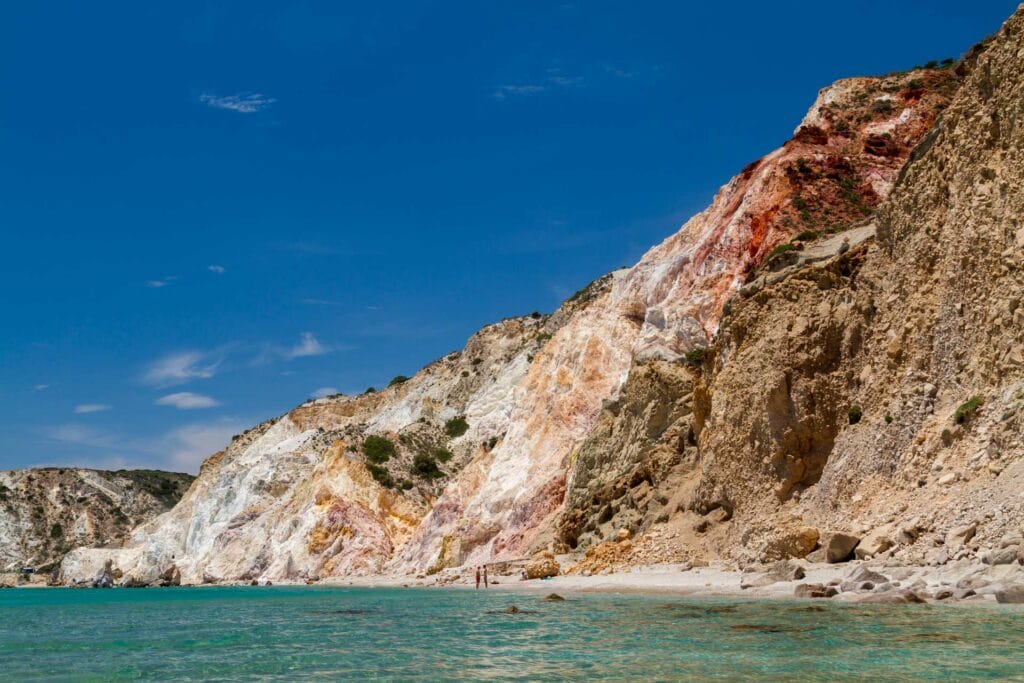
Firiplaka is one of the most visually striking beaches on the south coast. Multi-layered volcanic cliffs in shades of white, red, orange, and grey create a dramatic backdrop, while the water is shallow, calm, and ideal for families or anyone who simply wants a long, relaxed swim.
The beach is accessible by car (there is a rough dirt road and a basic parking area), but boat access opens up the western section where fewer people gather. From the water, you also get the best view of the cliff formations — layered geological strata that tell a story of eruptions, mineral deposits, and erosion stretching back millions of years.
There is a seasonal beach bar that serves drinks and basic food, but if you are on a boat with a cooler, you can anchor just offshore and have the best view without leaving the water.
Access: Dirt road (bumpy) or boat.
Best for: Families, relaxed swimming, geological interest, beach photography.
Tip: Visit in the afternoon when the sun lights up the cliff colours at their most vivid.
Gerakas feels less like a beach and more like a private natural pool. A long, narrow inlet on the southern coast, it is enclosed on nearly all sides by low rock walls, creating a lagoon effect. The water is shallow, warm, and impossibly clear — the kind of spot where you wade in and find yourself standing in ankle-deep turquoise for twenty metres before it deepens.
There is no road to Gerakas. It is reachable only by boat or by a long and poorly marked hiking trail. This isolation means it stays genuinely uncrowded even in August. For anyone with a boat, it is one of the most peaceful stops on the island — perfect for floating, reading, or simply doing nothing for an hour.
Access: Boat only (recommended) or demanding hike.
Best for: Calm water, privacy, couples, young children.
Tip: Bring everything you need — there is no shade, no facilities, and no one selling anything. That is the appeal.
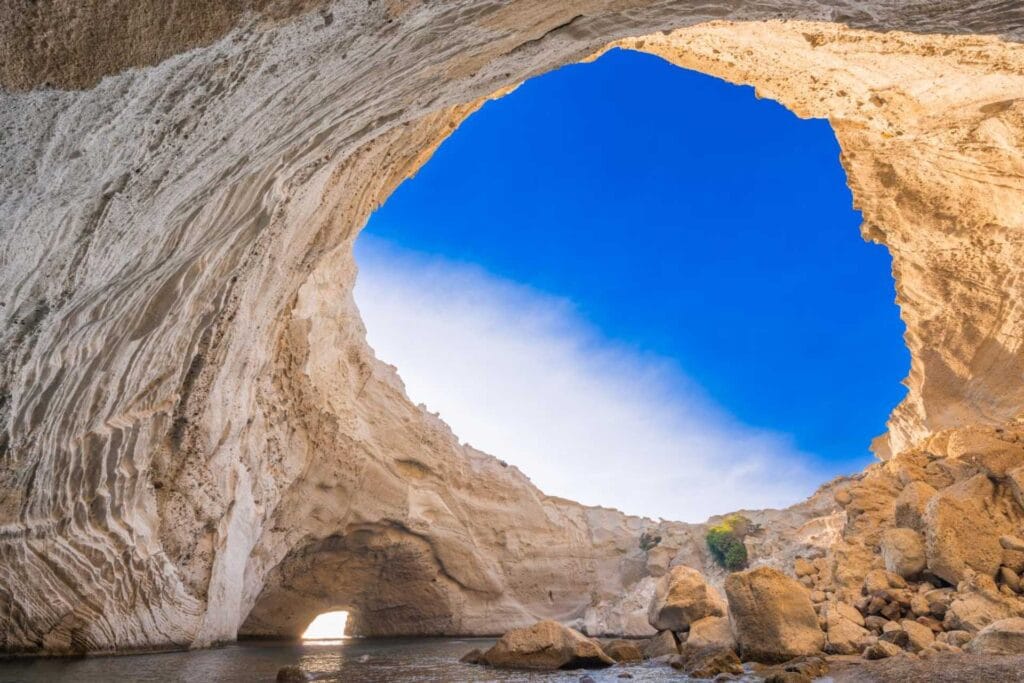
Sykia is a collapsed sea cave on the southwest coast, near Kleftiko. From the outside, it appears as a narrow opening in the cliff face. Inside, the cave opens into a cavernous chamber where the roof has partially fallen away, allowing sunlight to pour through and illuminate the water below in vivid shades of blue and green.
You cannot enter Sykia Cave by land. It is exclusively a boat destination, and most Kleftiko and Sykia boat tours include it as a highlight. Swimming inside the cave — surrounded by towering rock walls and lit from above — is one of the most memorable moments you can have in the Cyclades.
Access: Boat only. The entrance is a swim-through from your anchored boat.
Best for: Swimming, cave exploration, photography (the light is best late morning).
Tip: Water inside the cave is deeper and cooler than outside. Confident swimmers only.
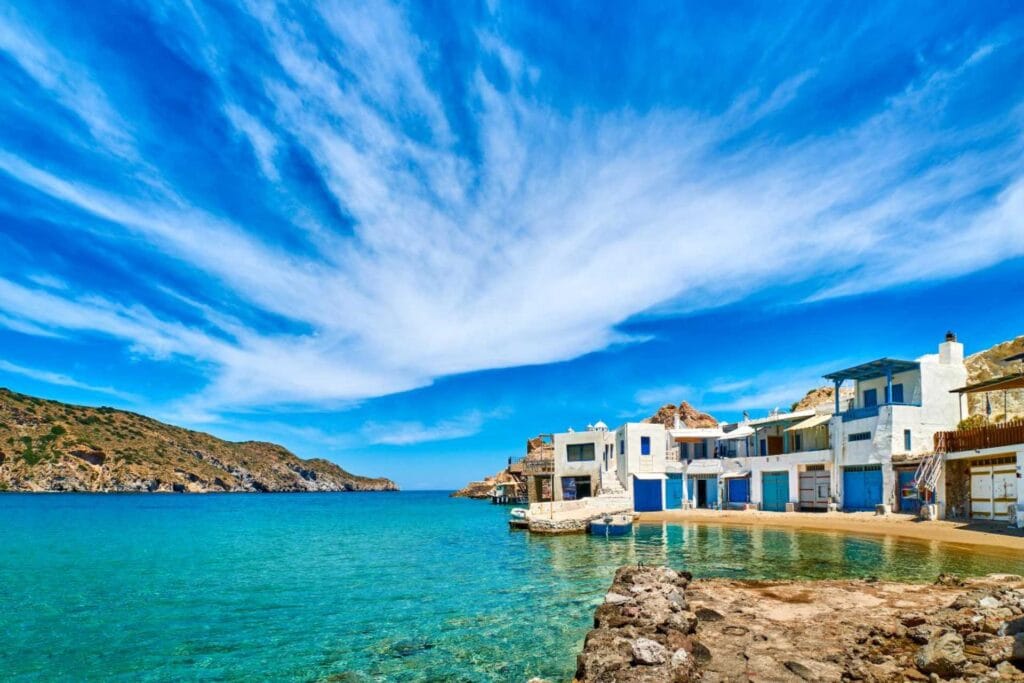
Firopotamos is a small fishing settlement on the north coast of Milos, known for its colourful syrmata — the traditional boathouses carved into the rock at water level, painted in vivid blues, greens, and reds. The beach itself is modest — a strip of sand and pebbles in a protected bay — but the setting is stunning and the water is clean and calm.
While Firopotamos is accessible by a narrow road, it has extremely limited parking and the approach is tight for larger vehicles. By boat, you simply pull into the bay and swim ashore. Combined with nearby Plathiena beach (sandy, shallow, and family-friendly), it makes an excellent morning stop before heading further west along the coastline.
Access: Narrow road (very limited parking) or boat.
Best for: Photography, village atmosphere, calm swimming.
Tip: Visit Firopotamos in the morning when the sunlight hits the boathouses directly — that is when the colours come alive.
Paleochori is one of the longer beaches on the south coast and one of the few where the volcanic origins of Milos are literally tangible. In certain spots, the dark sand is noticeably warm underfoot thanks to geothermal activity beneath the surface. The water temperature also varies — you may swim through pockets of warm water where underwater springs seep through.
The beach is organised with sunbeds, a couple of tavernas (including Sirocco — see our restaurant guide<!-- TODO: Once Article 1 is published, turn "restaurant guide" into a link: restaurant guide -->), and a relaxed atmosphere that suits a full day. It is accessible by road, but arriving by boat gives you the flexibility to explore the less-developed western section or combine it with Tsigrado and Firiplaka on a single south-coast route.
Access: Road (good access, parking available) or boat.
Best for: Full beach days, volcanic geology, warm-water swimming.
Tip: Ask at Sirocco about the warmest sand spots — the geothermal intensity varies by section.
The key to a great boat day on Milos is matching your route to the wind direction. The south coast (Kleftiko, Sykia, Tsigrado, Firiplaka, Gerakas, Paleochori) is usually best on days with calm or northerly winds, while the north coast (Sarakiniko, Firopotamos, Plathiena) works better when the south wind blows.
A typical full-day itinerary from Agia Kyriaki might look like this:
With a no-licence boat rental from Bloomarine, you can adjust this route in real time — skip a windy section, linger at a quiet cove, or add an extra stop that catches your eye from the water.
These are the best beaches in Milos — and to see them properly, you need a boat. But to see them properly — without the crowds, without the parking stress, and with the freedom to discover your own favourite spot — you need a boat.
Bloomarine offers self-drive boat rentals (no licence required), private skippered cruises, and guided tours to Kleftiko, Polyaigos, and the full south coast. Their boats depart from Agia Kyriaki, with full training provided before you set off.
See available boats and book your Milos boat day →
Frequently asked questions
Kleftiko, Sykia Cave, and Gerakas have no road access at all — a boat is the only practical way to visit them. Several other beaches, including Tsigrado and Firopotamos, are technically reachable by land but much easier and more enjoyable to access by boat. Renting a boat in Milos opens up the majority of the island's coastline.
No. Smaller boats (typically 4.5m and 5m with outboard engines up to 30–50 HP) do not require a licence in Greece. Companies like Bloomarine provide full training before departure, including navigation tips and a map of recommended stops. Larger speedboats may require a licence, or you can book a private tour with a local skipper.
The most popular route follows the south coast: departing from Agia Kyriaki, heading west to Kleftiko and Sykia Cave, then returning east via Gerakas, Tsigrado, and Firiplaka. This covers the most dramatic scenery on the island and works best on calm or northerly-wind days. For the north coast, a Sarakiniko–Firopotamos–Plathiena route is a shorter but equally rewarding option.
Late May through September offers the best swimming conditions. June and September are ideal — warm water, fewer crowds, and generally stable weather. July and August are hottest and busiest. For Kleftiko specifically, early morning arrivals (before 10:30) give you the caves largely to yourself before tour boats arrive.
Yes, for confident swimmers. The water inside the caves is deeper and cooler than the open sea, and visibility is excellent. Wearing a snorkel mask enhances the experience. Children and less confident swimmers should stay at the cave entrances where the water is calmer and shallower.